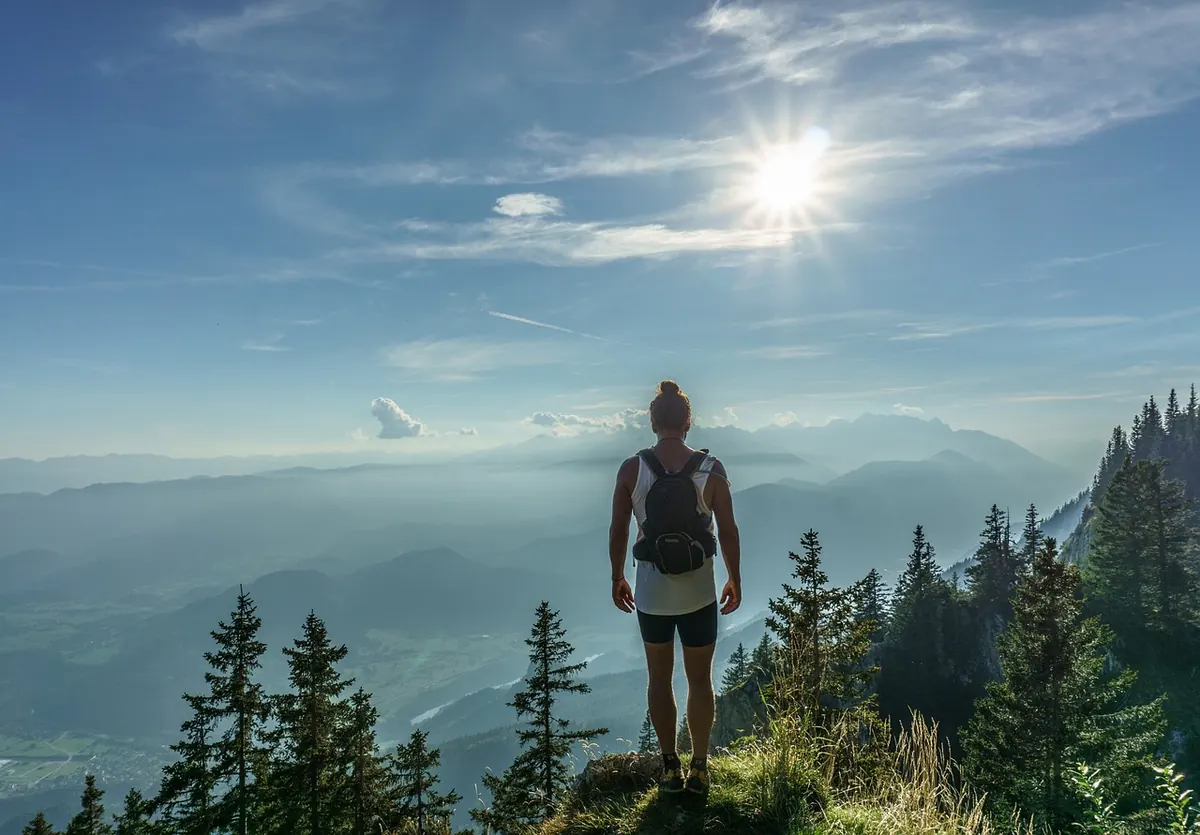
The rain arrived somewhere above Ennerdale and stayed for the better part of a fortnight. I had spent months planning a Coast to Coast crossing, from St Bees across the Lake District, the Yorkshire Dales and the North York Moors to Robin Hood's Bay, and the weather set about dismantling my assumptions one day at a time. Drizzle, then proper rain, then the sideways sort that finds the gap between hood and collar. On Nine Standards Rigg I stood in a hailstorm and laughed, mainly because there was nothing else left to do.
I finished. I also finished with a rucksack full of lessons I would rather have learned before I set off.
The forecast is a range, not a promise
My first mistake was optimism dressed up as research. I checked three forecasts, found the one promising a dry Wednesday, and packed for that version of the week. The hills do not read the app.
Now I plan for the wettest of the three and treat anything better as a bonus. In Britain, rain rarely turns up as a single bad afternoon. It arrives in systems that can sit over a valley for two or three days, so plan in blocks rather than days. If the middle of the week looks foul, that is the week to shorten the mileage rather than push through and arrive at a hostel broken.
Kit that actually earned its place
Some of what I carried was dead weight by day three: a rucksack cover that flapped in the wind and funnelled water into the pack, a cotton t-shirt that stayed damp for a week, spare clothes I never wore because I was saving them. What worked was less romantic and far more useful.
- A shell with a wired hood and pit zips. The hood needs to stay up on its own; if you are holding it with one hand, you cannot read a map or use a pole.
- Waterproof socks over a thin liner. Not elegant, occasionally sweaty, and the difference between a good day and a miserable one.
- Dry bags sorted by category rather than one big liner, so a wet tent going in does not soak the spare layers coming out.
- A bothy bag. Two people out of the wind can eat lunch, read a map and warm up in fifteen minutes instead of shivering through it.
- Poles. Greasy descents into Borrowdale and limestone steps in the Dales are much kinder with two extra points of contact.
- A paper map and compass in a case, with the phone in a waterproof pouch. Batteries fade faster in cold, wet conditions, and touchscreens are useless when your fingers are numb.
- A small sit mat. Sitting on wet ground for ten minutes is a morale tax you do not need to pay.
Wet feet are a morale problem
Everyone warns you about blisters. Fewer people tell you that permanently wet feet make you slow, irritable and prone to cutting corners on navigation. By day four I was walking with my head down, thinking about my boots rather than the route.
The fix was a routine, not a product. Air your feet at every stop longer than ten minutes. Change socks at lunchtime even when it feels pointless, because damp-fresh beats soaked-through. Keep one pair strictly for sleeping. Treat hot spots the moment you feel them rather than hoping they settle — a plaster and five minutes now costs far less than a day lost later.
If an area becomes hot, swollen, spreading or weeping, that is a job for a pharmacist or a doctor rather than a bigger plaster. Walking through an infection on a long-distance path is not toughness; it is a way to end your trip early.
Morale is kit you have to pack
Nobody puts morale on a kit list, and it is the thing that decides whether you finish. Mine lasted roughly until the second wet afternoon.
What helped was small and repeatable. A hot drink at lunch, even if that meant carrying a flask. A fixed end-of-day ritual: boots off, socks rinsed, brew on, shelter sorted before anything else. And talking to people — in a café, a pub, a hostel kitchen — because long wet days make you turn inward, and twenty minutes of conversation with a stranger lifts you more than a rest does.
I also learned to use the twenty-minute rule. If the weather is dreadful, commit to twenty more minutes and reassess. Often the rain eases, or you warm up, or the path turns. Sometimes it does not, and then you stop. Deciding early is far better than grinding on for four hours and resenting every step.
Plan wet days in, not around
My original schedule had no slack: fixed mileage, accommodation booked, fourteen days. That works in a dry summer and falls apart in a wet one.
Next time I would build in two short days from the start, roughly a third of a normal day's distance, and place them where the terrain is hardest. I would note the escape points properly — every road crossing, bus stop and village with a bed. Knowing a bail-out exists takes the pressure off, and you rarely use it once you know it is there.
I would also look harder at where I slept. A drying room, a bath and a radiator matter more than a slightly nicer room. Some nights that mattered more than food.
What I'd do differently
- Pack for the worst forecast, not the best.
- Carry one fewer set of clothes and one more set of socks.
- Build in two short days and name the bail-out points in advance.
- Book places with drying space where the route allows, and stay flexible where it does not.
- Eat properly at lunch, under shelter, instead of pressing on with a flapjack in the rain.
- Decide about stopping before I am too cold or too tired to decide well.
Heading out into a wet forecast
None of this makes rain pleasant, and I am not going to pretend otherwise. But a wet long-distance walk is entirely doable if you accept the conditions early and work with them: keep feet dry-ish, keep layers dry, keep the day's plan adjustable, and protect your mood as carefully as you protect your map.
That crossing was not the walk I imagined. It was, in the end, a better teacher. If you are heading out this autumn, take the heavy waterproof, take the extra socks, and leave the schedule a little room to breathe.
Photo: dreamypixel / Pixabay