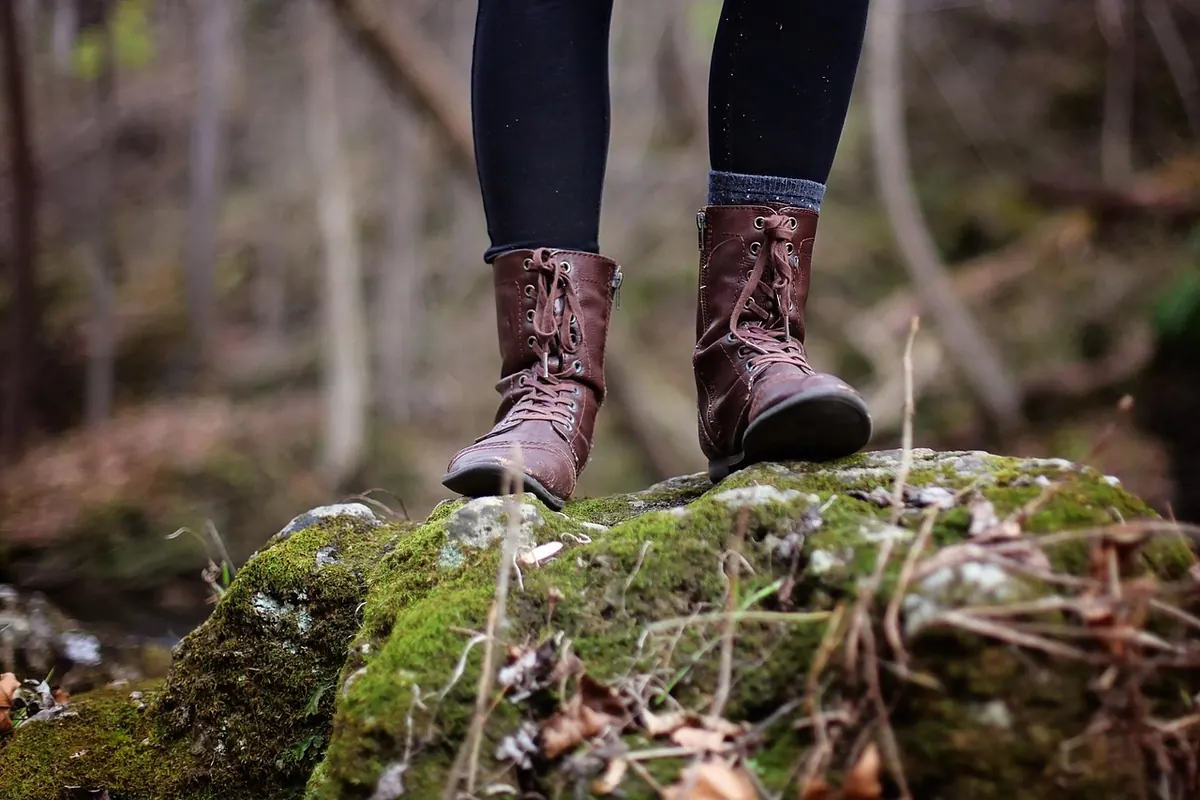
Ask a dozen hillwalkers whether you need boots and you will get a dozen answers, most of them delivered with more certainty than the question deserves. The honest position is that boots and trail shoes are tools for different jobs, and the job is decided by three things: the ground under your feet, the weight on your back and how far you intend to travel. Get that match right and your footwear stops being something you think about.
Start with the ground, not the boot
British trails are rarely one thing for a whole day. A route might begin on a compacted bridleway, cross two miles of peat bog, then climb a fellside of loose scree and wet rock before dropping into a lane. That mix is why the argument never settles.
Mud, standing water and tussock grass reward a shoe with deep, widely spaced lugs that clear themselves as you walk. Rocky fell tracks reward a stiffer sole that holds an edge. Long days on hard-packed paths reward cushioning and low weight. No single pair is best at all of it, so you are always choosing which conditions matter most on the route in front of you.
Grip: the difference is in the rubber and the lugs
Grip is not one quality. It is at least three, and they pull in different directions.
Mud and grass
Look for lugs around five millimetres deep, set apart rather than clustered. The gaps let mud fall out instead of packing into a smooth, useless sole. Shallow, closely spaced lugs that feel wonderful on a gravel path will have you skating on a wet descent through sheep pasture.
Wet rock and slabs
Here, depth matters less than the rubber compound. Softer, stickier rubber grips wet Lake District rhyolite and gritstone edges noticeably better, but it wears faster on abrasive ground. Harder compounds last longer and grip less well when it is greasy. If your routes are full of wet rock, accept the shorter lifespan.
Descents
Most slips happen going down, not up. A slightly rounded heel edge lets you land and smear rather than catch the corner of a blocky lug. On steep, loose ground, a shoe with a flexible sole spreads over the surface; a stiff booted sole relies on the lugs alone. Try both on a steep, grassy slope before you buy, and walk down it, not up.
Ankle support and the weight question
A high cuff does not prevent a sprained ankle. What it does is limit how far the joint can roll, and that restriction is genuinely useful when you are carrying a heavy pack, crossing scree, or walking on tussocky ground where you cannot see where your foot lands. If you have had repeated ankle injuries, or your balance is not what it was, boots are the sensible choice.
Trail shoes ask more of your ankles and, used sensibly, they help you build strength in the small stabilising muscles. Many walkers find that going lighter leaves them less fatigued at the end of a long day, which itself reduces the chance of a clumsy stumble. The trade-off is real, though: add a heavy winter pack and a light shoe starts to feel like a compromise.
The insole and midsole matter as much as the cuff. If you use orthotics, take them with you when you try anything on. A stiff rock plate under the forefoot makes a surprising difference on stony tracks.
Waterproofing: a membrane is not a promise
A waterproof boot keeps water out until water gets in. Then it holds that water, dries slowly, and turns into a heavy bucket you have to carry for the rest of the day. A trail shoe with a mesh upper soaks through in minutes, drains just as quickly and is often dry again within an hour of walking.
That single difference settles many decisions:
- Winter, wet bog and cold rain: a waterproof boot with a membrane, worn with gaiters, keeps your feet warm when staying dry matters most.
- Summer multi-day routes with stream crossings: a draining, non-waterproof shoe is usually more comfortable, because it will get wet anyway.
- Hot weather: membranes trap sweat. Many walkers find a breathable mesh shoe far cooler on a long climb.
- Anything with repeated river crossings: choose whatever drains fastest, then manage wet feet with wool socks and dry overnight.
Bear in mind that a membrane stops working properly if grit and mud block the outer fabric, so clean and reproof your boots if you want them to keep performing.
Comfort, fit and feet
Fit beats category every time. A well-fitted trail shoe will look after your feet better than a badly fitted boot. Shop late in the afternoon when your feet have spread, wear the socks you actually walk in, and check there is roughly a thumb's width between your longest toe and the front of the shoe. Your heel should not lift when you walk uphill, and your toes should not touch the front when you walk downhill.
Blister prevention is mostly about fit, moisture and friction. Two thin layers of sock, or a liner under a wool sock, can help. Deal with hot spots early rather than hoping they settle. If you have persistent foot pain, a painful bunion, or a condition such as diabetes, speak to a podiatrist or your GP before committing to long days on rough ground.
Matching footwear to UK routes
As a rough guide rather than a rule:
- South Downs Way, Ridgeway, lowland woods and canal towpaths: trail shoes are usually plenty, and much more comfortable over long, dry miles.
- Peak District edges and moorland: shoes in dry summer conditions; boots once the peat bogs are holding water.
- Lake District and Eryri fells: rocky, steep and often wet. Boots earn their weight on descent, especially if you are carrying a tent.
- West Highland Way and other long-distance routes: a mid-height boot or a supportive, cushioned shoe, chosen by pack weight. Many walkers pair shoes with a lighter pack and never look back.
Practical habits before you commit
Buy from a shop where you can walk on a slope and return the boots if they rub. Wear them indoors for a few evenings first, then take two or three short, low-stakes walks before anything ambitious. Learn to lace properly: a heel-lock loop stops your foot sliding forward on descents. Carry a couple of blister plasters and a spare pair of socks on any long day.
Dry footwear slowly, away from radiators, and stuff wet boots with newspaper overnight. Replace your footwear when the midsole feels flat and unforgiving, even if the uppers look fine — worn-out cushioning causes more discomfort than tread wear.
Whichever you choose, the best test is unglamorous: load your pack, walk the hill you actually plan to walk, and see how your feet feel at the end. That tells you more than any label.
Photo: Pexels / Pixabay